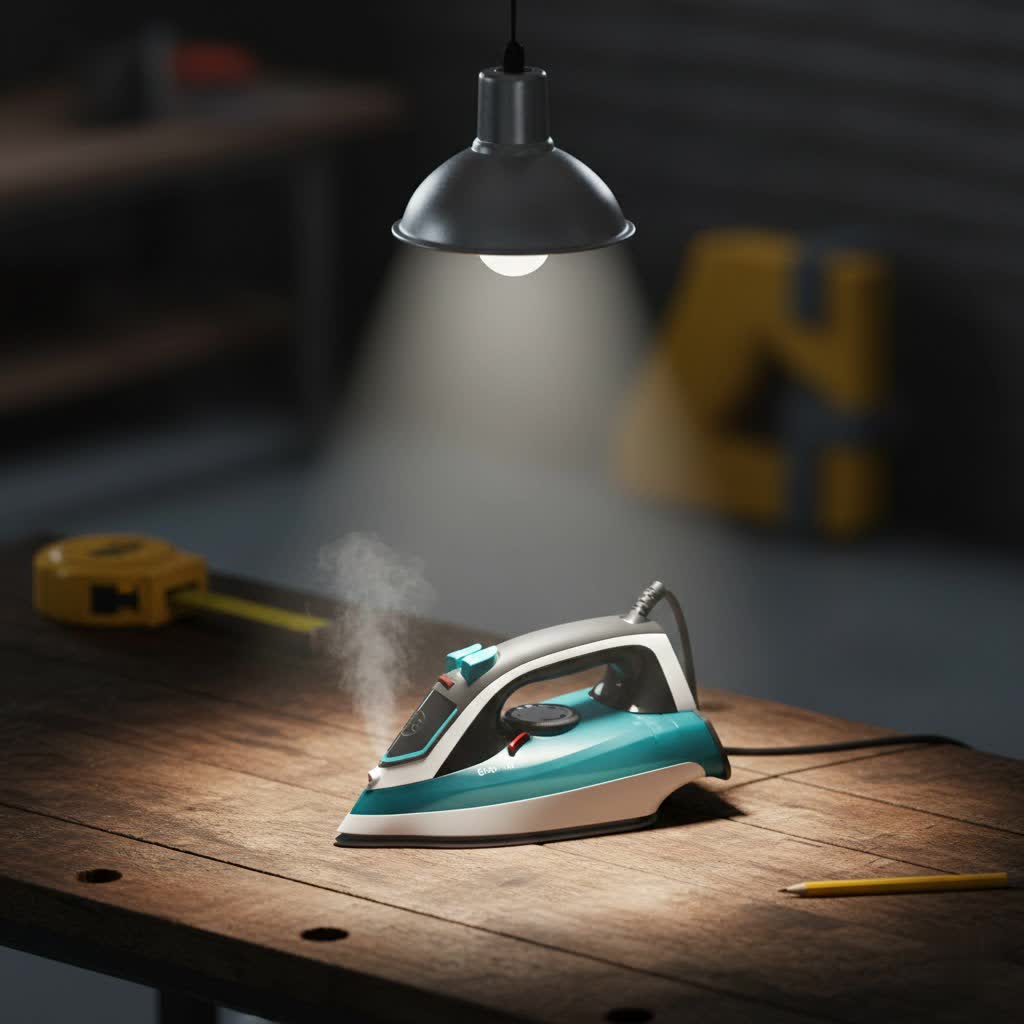
Achieving crisp, wrinkle-free garments doesn’t have to be a daunting task. While a pile of creased clothes can feel overwhelming, the right steam iron transforms this chore into a satisfying experience, leaving your wardrobe looking professionally polished. Whether you’re a seasoned sewist, a busy professional, or simply aiming for a neat appearance, a top-rated steam iron is an indispensable tool in your home. This comprehensive guide will navigate the world of steam irons, highlighting their various types, essential features, and the best models currently available to help you find your ideal ironing companion.
Understanding Different Types of Steam Irons
When you embark on the quest for the best rated steam iron, you’ll quickly discover a variety of designs tailored for different needs. Each type offers unique advantages, impacting convenience, power, and suitability for specific tasks. Recognizing these distinctions is the first step toward making an informed choice for your garment care routine.
Traditional Steam Irons (Handheld): These are the most common type, featuring a water reservoir, a heated soleplate with steam vents, and manual temperature controls. They are versatile and excellent for most everyday ironing, from cotton shirts to linen trousers. Their design allows for precision, making them ideal for tackling intricate areas like collars and cuffs.
Cordless Steam Irons: Offering unparalleled freedom of movement, cordless irons sit on a charging base that heats the soleplate. You detach the iron for use and re-dock it periodically to maintain temperature. This design eliminates cord tangles and snags, making them a favorite for quilters and those who value flexibility for smaller, quick touch-up jobs.
Travel Steam Irons: Compact and lightweight, travel irons are designed for portability. They typically have smaller soleplates and lower wattage, making them perfect for packing in luggage to ensure your clothes stay pristine on business trips or vacations. While not as powerful as full-sized models, they are highly effective for minor wrinkles on the go.
Pros and Cons of Each Steam Iron Type
Each steam iron category comes with its own set of benefits and drawbacks, influencing how they perform and integrate into your lifestyle. Understanding these nuances helps you align the iron’s capabilities with your specific ironing habits and expectations.
Traditional Steam Irons: These irons are lauded for their versatility and consistent heat output, making them suitable for a wide range of fabrics and ironing tasks. They often boast powerful steam bursts and precise temperature control, ensuring effective wrinkle removal. However, their cord can sometimes limit maneuverability and require an accessible power outlet near an ironing board. They can also be bulky to store compared to other options.
Cordless Steam Irons: The primary advantage of cordless irons is unrestricted movement, allowing for smooth, uninterrupted glides across garments without fighting a tangled cord. This makes detailing and large fabric areas more fluid. The main trade-off, however, is the need for frequent re-docking to reheat the soleplate, which can interrupt ironing flow for larger loads and might make them less efficient for extensive sessions. Their steam output can also be less powerful than corded counterparts.
Travel Steam Irons: These mini irons excel in portability and compact storage, fitting easily into suitcases or small living spaces. They are perfect for quick touch-ups and light fabrics when away from home. On the downside, their smaller size and lower wattage mean they often lack the power and steam capacity for deep wrinkles or heavy fabrics, making them less suitable for daily, extensive ironing.
Comparison of Popular Steam Iron Types
|
Our Picks for the Best Steam Iron in 2026
As an Amazon Associate I earn from qualifying purchases.
|
||
| Num | Product | Action |
|---|---|---|
| 1 | Travel Steamer for Clothes, 1200W Handheld Garment Steamer & Iron 2-in-1, 15s Fast Heat-up Portable Steam Iron with Large Ceramic Panel, 120V Mini Ironing Machine for Home, Travel and Business |

|
| 2 | BLACK+DECKER Easy Steam Compact Iron for Clothes, Automatic Shutoff, Nonstick Plate, Light Weight, 1200 Watts |
|
| 3 | Jack & Rose Travel Steamer for Clothes,100-220V Portable Iron,15s Heat Up,Steamer & Iron 2 In 1, Travel Size,Large Ceramic Heat Panel,for Global and Europe |
|
| 4 | Hamilton Beach Steam Iron for Clothes & Garment Steamer with Smooth Press Stainless Steel Soleplate, 1200 Watts, 8’ Retractable Cord, Black (14214) |
|
| 5 | BLACK+DECKER Steam Iron for Clothes with Retractable Cord, Vertical Steaming, Anti-Drip Design, Spray Mist and Auto Clean Button, 1200W |
|
| 6 | Rowenta Handheld Steamer for Clothes, Pure Force 2in1 Steamer & Iron, 1875W, Vertical/Horizonal Steaming & Ironing, Lightweight, Auto-off, XL power, 1875 Watts, DR8822 |
|
| 7 | Rowenta Iron, Focus Excellence Stainless Steel Soleplate Steam Iron for Clothes, Retractable Cord, 400+ Microsteam Holes, Powerful steam, LED Display, 1750 W Ironing Clothes, Cordreel, Red DW5433 |
|
| 8 | Professional Garment Steamer, 2-in-1 Vertical & Handheld for Wrinkles, 6 Steam Modes, 30-Second Heat Up, 800mL Tank, Auto Shut-Off, Portable & Standing Design, White |
|
| 9 | Sunbeam Turbo Steam Iron 1400W Quick Heat Stainless Steel Soleplate Shot of Steam Horizontal and Vertical 3 Way Auto Off 240ml Water Tank White Teal |
|
| 10 | Rowenta Iron Steamer for Clothes, Focus Stainless Steel Soleplate, 400 Microsteam Holes, Powerful Steam Iron, Lightweight, Leakproof, 1725 Watts |
|
Choosing the right steam iron depends heavily on your typical usage. This table provides a quick overview to help you compare the main characteristics of each type, aiding your decision-making process.
| Feature | Traditional Steam Iron | Cordless Steam Iron | Travel Steam Iron |
|---|---|---|---|
| Size | Standard, often bulky | Standard, with charging base | Compact, mini |
| Power | High (1500-2000W) | Moderate (1200-1500W) | Low (800-1200W) |
| Maneuverability | Good, but cord-limited | Excellent, cord-free | Excellent, lightweight |
| Steam Output | Often powerful & consistent | Moderate to good | Minimal to moderate |
| Heat Retention | Continuous | Intermittent (re-docking) | Quick heat, lower sustained |
| Price | Mid-range to High | Mid-range to High | Low to Mid-range |
| Best For | Everyday use, large loads, various fabrics | Quick touch-ups, quilting, freedom of movement | Travel, emergencies, light fabrics |
Essential Guide to Choosing the Best Steam Iron
Selecting the best rated steam iron involves more than just picking a popular brand; it requires careful consideration of various features that impact performance, safety, and ease of use. A well-chosen iron will make your ironing tasks quicker and more effective, transforming a dreaded chore into a manageable one.
1. Determine Your Usage Needs:
Before diving into features, consider how you’ll primarily use your steam iron. Do you iron frequently, tackling large loads of heavy fabrics like denim and linen? Or are you an occasional user, needing quick touch-ups on delicate silks or travel clothes? Your ironing frequency, fabric types, and the typical size of your loads will guide your decision towards an iron with appropriate power, soleplate size, and steam capabilities.
2. Soleplate Material:
The soleplate is the heated surface that glides over your clothes, and its material significantly affects performance.
- Ceramic: Known for even heat distribution and smooth gliding, ceramic soleplates are durable and resistant to sticking. They are a popular choice for their efficiency on most fabrics.
- Stainless Steel: Extremely durable and scratch-resistant, stainless steel soleplates also glide smoothly and heat up quickly. They are excellent for heavy-duty ironing.
- Non-stick/Teflon: While they offer a very smooth glide and prevent fabrics from sticking, non-stick coatings can be less durable than ceramic or stainless steel and may scratch over time.
3. Steam Output and Features:
Effective steam output is crucial for relaxing fabric fibers and eliminating wrinkles. Look for irons with:
- High Wattage (1500W+): Higher wattage generally means faster heat-up times and more powerful, consistent steam production.
- Continuous Steam: A steady flow of steam helps to smooth wrinkles more efficiently.
- Steam Burst/Shot of Steam: This feature provides an extra blast of steam for stubborn wrinkles or for vertical steaming garments on a hanger.
- Vertical Steaming: Useful for quickly refreshing hanging clothes, drapes, or delicate items that are difficult to lay flat.
- Anti-Drip System: Prevents water from leaking onto your clothes, especially at lower temperatures, safeguarding against water spots and stains.
4. Temperature Control:
Precise temperature control is vital for safely ironing different fabric types. Look for clear, easy-to-use dials or digital displays with specific settings for various materials (e.g., silk, wool, cotton, linen). An iron that heats up quickly and maintains a consistent temperature across its soleplate will yield the best results.
5. Weight and Maneuverability:
The iron’s weight and how easily it moves are critical for user comfort and efficiency.
- Weight: A heavier iron can use its weight to help press out stubborn wrinkles with less effort from you. However, a lighter iron offers greater maneuverability for detailing or longer ironing sessions, reducing arm fatigue. Find a balance that feels comfortable for your strength and typical use.
- Cord Design: A retractable cord offers neat storage and prevents tangles. A swivel cord attachment (often 360-degree) prevents the cord from getting in the way during ironing. Cord length is also important; an 8-foot or longer cord offers more reach. For ultimate maneuverability, consider a cordless model if your ironing tasks are mostly quick touch-ups.
6. Safety Features:
Safety is paramount. Most modern steam irons include:
- Auto-Shutoff: Automatically turns off the iron if left unattended for a certain period (e.g., 30 seconds face down or on its side, 8-15 minutes upright). This feature provides peace of mind and prevents accidents.
- Self-Cleaning Function: Helps flush out mineral deposits from the steam vents, extending the life of your iron and preventing calcification that can stain garments.
7. Water Tank Capacity and Ease of Filling:
A larger water tank means fewer refills during extended ironing sessions. Look for a tank that is transparent (to easily see the water level) and has a wide, easily accessible fill port to minimize spills.
Top 5 Best Rated Steam Irons You Should Consider
Based on extensive testing and user reviews, these steam irons consistently earn high marks for their performance, features, and overall value. Each model offers a distinct set of advantages, catering to different ironing preferences and needs.
1. CHI Lava Electric Iron (Model 13113)
The CHI Lava Electric Iron stands out as a premium choice, often lauded for its powerful performance across all fabric types. It quickly reaches optimal temperatures and provides incredibly smooth gliding, making even the toughest wrinkles disappear effortlessly. Its advanced ceramic soleplate, infused with lava particles, ensures even heat distribution and durability.
Pros:
- Exceptional performance: Glides smoothly across all fabrics, including cotton, linen, silk, and polyester.
- Rapid heating: Heats up in no time, with even heat distribution across the soleplate.
- Powerful steam: Features over 400 steam holes for a decent-sized, effective steam cloud.
- Precision detailing: Tapered nose design makes it excellent for intricate areas around buttons and seams.
- Convenient features: Includes a retractable cord for easy storage and an auto-shutoff safety mechanism.
Cons:
- Higher price point: This is one of the more expensive options on the market.
- Weight: At 3.5 lbs, it’s among the heavier irons, which might cause fatigue during long sessions.
- Water tank access: Some users find the water refill slot initially challenging to locate and use.
Overall: The CHI Lava Electric Iron is a dream for those seeking a high-performance, durable iron that makes ironing almost enjoyable. Its premium features justify the investment for frequent ironers.
2. Hamilton Beach Durathon 19803
Recognized as an excellent all-around performer and a top value choice, the Hamilton Beach Durathon 19803 consistently impresses with its strong steaming capabilities and competitive pricing. It’s a reliable workhorse for everyday ironing, effectively smoothing a variety of fabrics without breaking the bank.
Pros:
- Outstanding steam output: Delivers impressive, consistent steam, often double or triple that of many competitors, making quick work of wrinkles.
- Effective ironing: Performs well on cotton, linen, satin, and silk with minimal passes.
- Great value: Offers premium features and performance at a very reasonable price.
- User-friendly design: Features included cord storage and convenient spray and steam functions.
Cons:
- Bulky design: Can feel a bit large and less agile for fine detailing.
- Polyester performance: May require extra passes on denser materials like polyester.
- Heat output: While good, its average temperature might not be as high as some premium models.
Overall: The Hamilton Beach Durathon 19803 is the ideal choice for most households. It provides exceptional steam and solid performance for a wide range of fabrics, making it an unbeatable value.
3. Rowenta Pro Master Xcel DW8360U1
For those who prioritize precision and efficiency, especially for tailoring or detailed garment care, the Rowenta Pro Master Xcel DW8360U1 is a standout. It’s engineered to make quick work of wrinkles while excelling in intricate detailing. Rowenta is renowned for its high-quality soleplates and powerful steam.
Pros:
- Master of detailing: Its tapered nose and numerous steam holes (up to 550) are perfectly designed for navigating around buttons, seams, collars, and pleats.
- Strong performance: Effective and efficient across various fabrics, with a quick heat-up time.
- Impressive steam burst: Visually powerful steam bursts, though actual fabric impact can vary.
- Ergonomic design: Comfortable handle and smooth glide despite its weight.
Cons:
- Expensive: Sits on the higher end of the price spectrum.
- Heavy and somewhat cumbersome: Its weight (3.1 lbs) can be tiring for prolonged use, though it aids in pressing.
- Steam efficiency: While steam burst is strong, the effective distribution on fabric might not always match expectations.
Overall: The Rowenta Pro Master Xcel DW8360U1 is an excellent investment for dedicated ironers or those who frequently deal with garments requiring meticulous detail work.
4. Black+Decker D3030 Allure
The Black+Decker D3030 Allure is a lightweight and maneuverable option, particularly praised for its effectiveness on delicate fabrics. It combines affordability with a design that makes precision ironing a breeze, proving that you don’t need to spend a fortune for quality results on sensitive materials.
Pros:
- Excellent for delicate fabrics: Effortlessly removes wrinkles from silk and satin with few passes.
- Precision tip: Narrow, tapered tip excels at precision work and navigating tight spots.
- Lightweight and agile: At just 1.9 lbs, it’s about half the weight of many competitors, making it easy to handle and maneuver.
- Reasonably priced: Offers great performance for its cost, especially for specific fabric needs.
Cons:
- Average steam output: Its steam production is not as powerful as some higher-end models.
- Moderate heating: Reaches average temperatures, which might slow down ironing on very dense materials like polyester.
- Fewer steam holes: With only 23 holes, steam distribution is less even compared to irons with hundreds of holes.
Overall: The Black+Decker D3030 Allure is a fantastic budget-friendly choice for individuals who frequently iron delicate garments or need an iron that offers exceptional control and maneuverability for small, detailed tasks.
5. Panasonic Cordless Advanced Ceramic Iron
For the ultimate in flexibility and ease of movement, the Panasonic Cordless Advanced Ceramic iron is unmatched. Its innovative design frees you from the constraints of a cord, making it a favorite for quilters and those who perform quick, small ironing jobs.
Pros:
- Unparalleled maneuverability: Cord-free operation allows for seamless gliding without tangles or obstructions.
- Lightweight and agile: Extremely portable and nimble, perfect for detail work and navigating tight curves.
- Dual-tapered soleplate: Designed to iron effectively in any direction.
- Convenient docking station: Features an electric dock for reheating the soleplate between uses.
Cons:
- Requires frequent re-docking: Not ideal for long, continuous ironing sessions as it needs to recharge periodically.
- Lower steam output: Its steam production is significantly less than corded models, potentially requiring more passes for stubborn wrinkles.
- Higher price for a niche product: Can be expensive for its specific use case.
Overall: The Panasonic Cordless Advanced Ceramic is a specialized tool best suited for quick touch-ups, crafting, or anyone who values the freedom of a cord-free ironing experience above continuous high power.
Practical Tips for Using and Maintaining Your Steam Iron
To ensure your best rated steam iron performs optimally and lasts for years, proper usage and diligent maintenance are key. Simple habits can prevent common issues and keep your garments looking their best.
First and foremost, always read your iron’s user manual thoroughly. Each model may have specific recommendations for water type, cleaning, and storage. Generally, using distilled or demineralized water is highly recommended, especially in areas with hard water, to prevent mineral buildup (calcification) inside the iron. While many modern irons boast anti-calc or self-clean systems, regular use of appropriate water can extend their effectiveness and prevent white mineral flakes from staining your clothes.
Regularly clean your iron’s soleplate. For ceramic or stainless steel soleplates, a damp cloth with a mild cleaner (like white vinegar or baking soda paste for tough spots) can remove starch buildup or scorch marks. Ensure the iron is cool and unplugged before cleaning. If your iron has a self-cleaning function, use it periodically as per the manufacturer’s instructions to flush out mineral deposits from the steam vents.
After each use, empty the water tank completely and leave the fill cap open to allow any remaining moisture to evaporate. This prevents mildew growth and corrosion inside the tank. Finally, store your iron in an upright position, especially if it’s still warm, to protect the soleplate and prevent water leakage. If your iron has a retractable cord, utilize this feature for tidy and safe storage.
Conclusion
Choosing the best rated steam iron is an investment in both your wardrobe and your peace of mind. With the right model, tackling wrinkles becomes a far less daunting task, leaving your clothes impeccably pressed and ready to wear. Whether you prioritize powerful steam, nimble cordless operation, precision detailing, or exceptional value, there’s a perfect steam iron waiting to elevate your garment care routine. Consider your unique needs, explore the features that matter most to you, and embrace the joy of perfectly smoothed fabrics.
What ironing challenge will you conquer first with your new, top-rated steam iron?
Frequently Asked Questions
What are the most important features to look for in a new steam iron?
The most critical features include high wattage for quick heating and powerful steam, an anti-drip system to prevent water spots, a durable soleplate material that glides smoothly, precise temperature controls for different fabrics, and an auto-shutoff safety feature for peace of mind. Consider a retractable cord for convenient storage and a comfortable ergonomic handle for ease of use during longer ironing sessions.
Is a cordless steam iron worth it, or are corded models better?
A cordless steam iron offers unparalleled freedom of movement, making it excellent for quick touch-ups, crafting, or tasks where maneuverability is key. However, corded models generally offer more consistent, powerful heat and steam without the need for frequent re-docking, making them more efficient for large loads or heavy fabrics. Your choice depends on whether continuous power or unrestricted movement is your higher priority.
How often should I clean my steam iron, and what type of water should I use?
It’s advisable to clean your steam iron’s soleplate as needed, especially if you notice residue or stickiness. For internal cleaning, use the self-clean function (if available) every few weeks or months, depending on usage. Always use distilled or demineralized water to prevent mineral buildup and extend your iron’s lifespan, especially if you live in an area with hard water.
What is the ideal wattage for a steam iron?
For most household needs, a steam iron with a wattage between 1500W and 1800W is ideal. Higher wattage typically translates to faster heat-up times and more robust, consistent steam output, which are crucial for efficiently removing wrinkles from various fabric types. Irons above 1800W are considered very powerful and are excellent for heavy-duty ironing.
Can I use a steam iron on all types of fabrics?
While a steam iron can be used on most fabrics, it’s crucial to adjust the temperature and steam settings according to the fabric type. Delicate materials like silk and synthetic blends require lower heat and often less steam, while cotton and linen can tolerate higher temperatures and powerful steam. Always check the garment’s care label and test on an inconspicuous area first.
What’s the difference between a steam iron and a garment steamer?
A steam iron uses a hot soleplate and steam to press and smooth fabrics flat, creating crisp creases and sharp lines. A garment steamer, conversely, uses only steam (no direct heat or pressure from a soleplate) to relax fibers and remove wrinkles from hanging garments. Irons are better for structured items and crisp finishes, while steamers are gentler and quicker for refreshing delicate or irregularly shaped clothing.
Get our weekly buyer guide
Practical specs, not advice. Unsubscribe anytime.
